
Toyota Technical Development Corporation
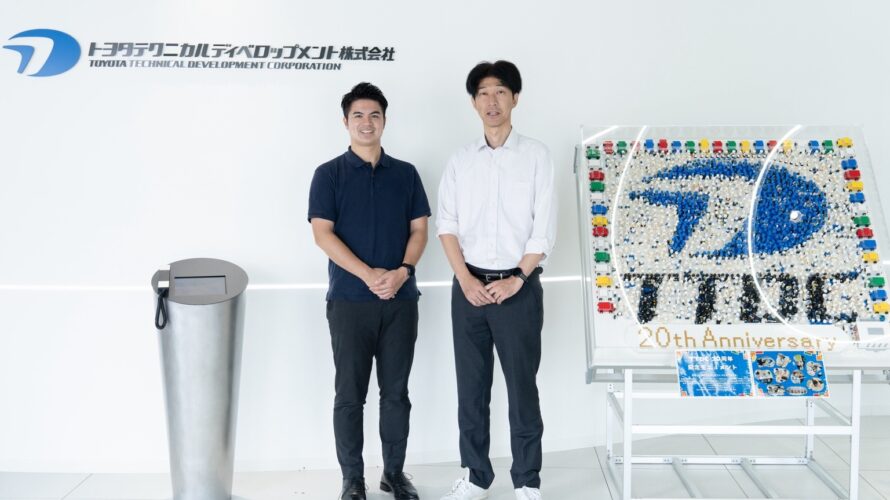

| Client | Toyota Technical Development Corporation (Providing measurement and simulation services and IP solutions that support mobility development) |
|---|---|
| Interviewee | Koji Ichikawa (AI & Data Science Technology Office, Simulation Engineering Department) |
| Project | VLM Evaluation Using Digital Twins |
| Support Structure | AI Engineer Staffing / Akatsuki AI Technologies Inc. |
| Challenge | Securing a structure capable of advancing requirements definition and development in parallel within a short timeframe for projects involving AI implementation, including VLM (Vision-Language Model) technology, HMI generation, and cloud execution environment development. |
| Solution | An Akatsuki AI engineer joined the project team through a staffing arrangement and took responsibility for development work. In addition, organization-level technical support was provided in parallel by Akatsuki AI’s technical leadership. |
| Result | By advancing requirements definition and implementation validation in parallel, the team identified key issues early while moving forward with VLM technology benchmarking and PoC development. |
目次
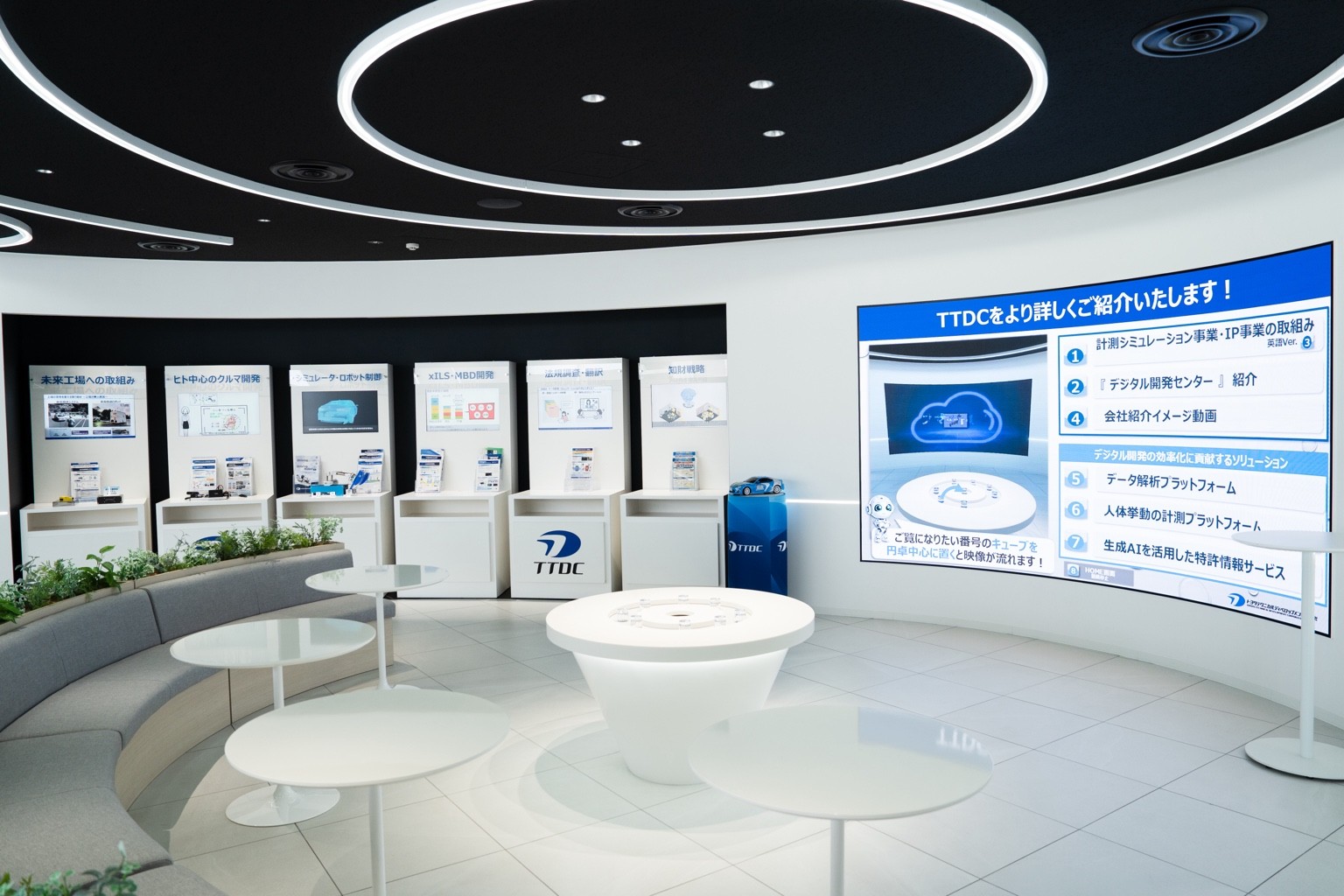
Toyota Technical Development Corporation (hereinafter “TTDC”) provides measurement and simulation services and IP solutions that support mobility development. Within the company, the AI & Data Science Technology Office of the Simulation Engineering Department uses simulation data, vehicle data, and image and video data to establish new technologies and implement AI into business processes.
One of the themes the team has been working on is the evaluation of VLM technology using digital twins. Behind this initiative was a broader question: how far could AI go in addressing technical challenges that could not be fully resolved within existing frameworks?
Mr. Ichikawa: “This was a theme for which there was still no clear answer, either socially or technologically. We needed to explore how far AI and simulation technologies could go in addressing challenges that could not be fully resolved through existing frameworks and approaches.”
The validation environment envisioned for this purpose was a VLM evaluation framework using digital twins. By digitally reproducing real-world environments and running simulations under a variety of conditions, the team could create an environment for evaluating the practical potential of the technology. The project focused on determining how effectively VLM (Vision-Language Model) technology could be utilized within this digital twin environment.
Mr. Ichikawa: “It was an area where the technology itself was still being established. One of the main questions was simply determining how far VLM technology could actually be used.”
TTDC has long been a group of specialists in measurement technologies, accumulating extensive expertise in vehicle development. At the same time, as the organization increasingly shifted toward software-related fields, strengthening its capabilities in AI and data science became an important challenge.
Mr. Ichikawa: “Even if you can build a digital twin, it is difficult to translate it into actual simulations and future predictions and then connect those results back to the real world. Building people and organizations that understand this entire process was extremely difficult.”
More specifically, TTDC needed people capable of handling areas such as technical validation using VLMs, HMI generation, development of cloud environments for running VLMs, and integration with other systems.
Mr. Ichikawa: “To build a digital twin in the cloud, we needed people who understood both cloud environments and AI, and who could also get hands-on and actually build things. We had a reasonable number of people internally who could identify trends and say, ‘This is the kind of technology that is gaining attention.’ What we needed was the ability to take the next step and turn those ideas into something tangible.”
For projects where requirements definition and implementation need to proceed simultaneously, a shortage of development resources can cause discussions to remain theoretical and place excessive burdens on project managers and existing team members. In AI projects, performance limitations and technical issues often become apparent only through implementation and evaluation. As a result, having people who could actually perform the development work had a direct impact on the speed of decision-making.
TTDC first came into contact with Akatsuki AI through an exhibition. An introduction from a department head in another division within TTDC led to discussions about Akatsuki AI as a potential partner for strengthening the project team.
After comparing several companies, the deciding factor was not simply the individual engineer’s technical skills.
Mr. Ichikawa: “There were other companies with AI capabilities. What stood out about Akatsuki AI, however, was that behind the dispatched AI engineer was an organization capable of supporting that engineer. Having access to technical support from technical leadership is something you do not typically get with conventional staffing, and it allows gaps in skills to be supplemented. Rather than relying solely on an individual engineer, we could receive technical support from the organization as a whole. Among the companies we spoke with, Akatsuki AI gave us the strongest sense of comprehensive support.”
Throughout the project, this structure enabled the team to draw on Akatsuki AI’s broader technical expertise whenever necessary, rather than depending solely on the capabilities of a single assigned engineer.
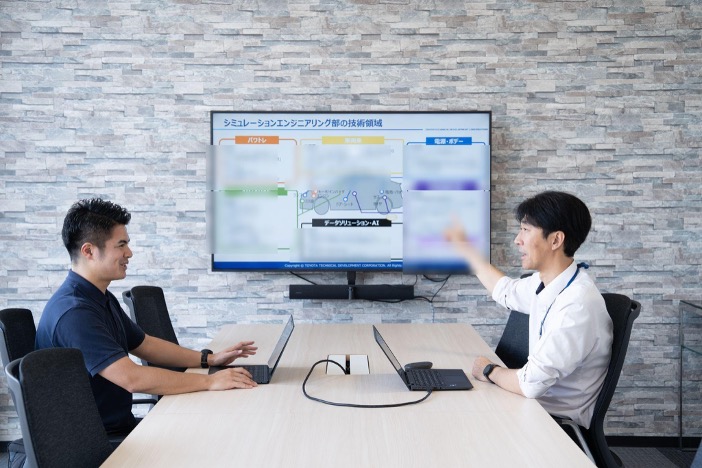
The project was structured with Mr. Ichikawa serving as the project lead, TTDC members handling project management and requirements definition, and an Akatsuki AI engineer taking responsibility for development work. Existing team members and the external engineer were integrated into a single team, with tasks divided by technical theme. Issues identified through implementation and validation were then fed back into the requirements definition process.
A key aspect of the approach was not simply asking the external engineer to work independently, but encouraging early consultation whenever questions or uncertainties arose regarding assumptions or requirements. This helped minimize gaps between requirements definition and implementation. Although the engineer participated remotely, daily and weekly meetings enabled the team to continue both evaluation and development without losing momentum.
Mr. Ichikawa: “When specifications have not yet been fully defined, it is important for the receiving organization to clearly explain the context and organize the tasks. But if roles are clearly defined and the PM provides appropriate support, external engineers can be integrated into the team as a real force for driving development. We confirmed that even for AI projects, an engineer staffing model can work effectively in certain areas.”
At the same time, the project also provided lessons about aligning expectations.
Mr. Ichikawa: “In terms of cloud-related technologies, there was initially a gap between the level we expected and the actual level of expertise. However, the engineer’s ability to learn quickly and implement solutions helped compensate for those gaps and allowed the project to move forward. From our side as well, we learned how important it is to align expectations and define the scope of responsibilities more specifically.”
During the project, issues also emerged around information sharing, including reporting. When TTDC raised these concerns with Akatsuki AI, the company stepped in to provide support, leading to improvements.
Mr. Ichikawa: “What left an impression on me was that when an issue arose, it did not end with one-way communication. We were able to discuss it together and make improvements. I developed trust in Akatsuki AI’s approach of working with us as an organization to address issues through dialogue.”
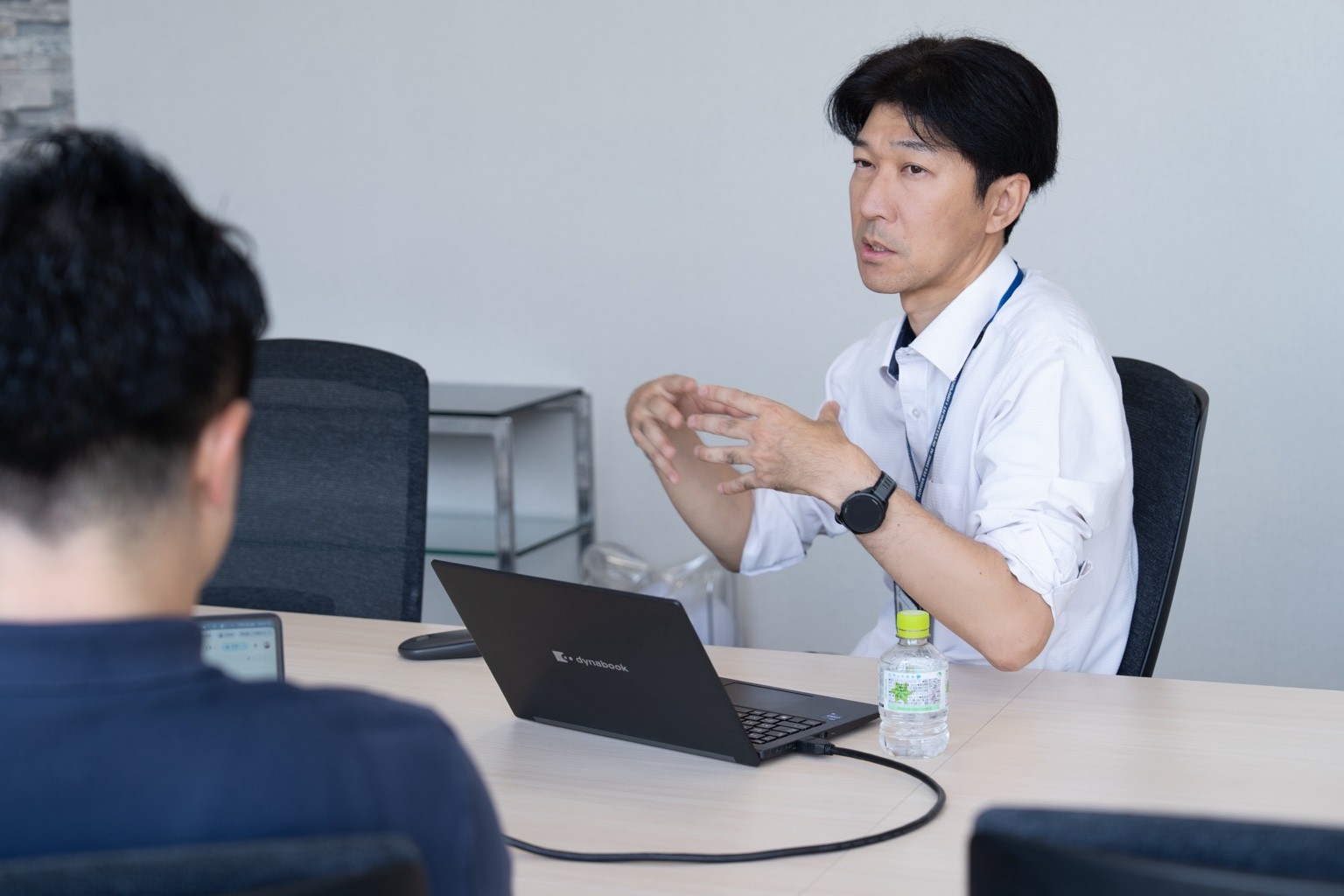
In the project, the target area was recreated as a digital twin using information obtained from sensors and other sources. The data was then analyzed using VLM technology to generate images and videos representing potential risk scenarios. By creating visual data from multiple perspectives and training models using a combination of real-world and virtual data, the team has been working toward the development of future prediction models.
The benefits of the project structure went beyond simply adding more personnel.
Mr. Ichikawa: “By separating the members responsible for requirements definition from those responsible for development work, we were able to create a structure in which the workload was less likely to become concentrated on the PM and existing team members. As a result, it became easier to advance requirements definition and implementation validation in parallel.”
Mr. Ichikawa also discussed what it means to define success in an R&D project.
Mr. Ichikawa: “Being able to determine that a technology works up to a certain level, identify where its limitations are, and fully validate those boundaries before defining the next challenge is itself an important outcome. Every time a new model appears, we benchmark it and adapt accordingly. It is an ongoing cycle.”
Beyond measurable results, the project also prompted the team to think more concretely about which capabilities should remain in-house and where collaboration with external partners would be most effective. Attempting to handle every AI project entirely internally can slow progress, reinforcing the importance of task design and onboarding processes that assume the use of external resources.
The AI & Data Science Technology Office is currently interested in building systems that utilize AI agents.
Mr. Ichikawa: “We would like to build multiple systems that make use of AI agents.”
In highly specialized and rapidly evolving areas such as generative AI, VLMs, cloud execution environments, and data platforms, it is important to have a structure that allows skilled professionals to be brought in when needed. Rather than ending AI initiatives with one-off technical validation, TTDC plans to continue strengthening its core internal capabilities while collaborating with external partners to implement AI within actual business processes.
The type of talent TTDC is looking for is also clear.
Mr. Ichikawa: “People with knowledge across multiple technical domains are important. It is not enough to know only AI. Someone may understand cloud technologies or have expertise in a particular industry. What matters is how many ‘AI + something’ capabilities they can bring. Depending on the project, we may also look for people who can communicate in English while carrying out their work.”
Mr. Ichikawa: “For AI projects, I think it is difficult to build a perfect team entirely in-house from the outset. What is important is to distinguish between what can be entrusted to external professionals and what should remain internal, such as decision-making and understanding requirements. If the objectives, expected outcomes, tasks, and reporting lines are clearly defined, external engineers can become more than just additional resources — they can become partners who genuinely move development forward.”
Finally, when asked to describe Akatsuki AI Technologies in a single phrase, Mr. Ichikawa answered:
Mr. Ichikawa: “A hands-on implementation partner that can immediately contribute to steadily moving AI projects forward in the field.”
Through AI Transformation (AX), Akatsuki AI Technologies supports major enterprises in building data infrastructure and transforming business operations. We also provide AI engineer staffing support for companies seeking to strengthen their development capabilities in AI and data science.
O-net, Inc. 様
Information Strategy and Technology Co., Ltd. 様
PAPABUBBLE Inc. 様